For Churches & Small Groups
From Closed Hearts to Open Hearts
A Six-Session Biblical and Historical-Theological Discussion Guide
Free for every church. Print it, teach it, share it.
Three things, all free
- 01
See it first, on us
Pastors and designated church staff are invited to a complimentary screening. Watch it, pray about it, then decide how your church uses it. Nobody is asked to promote a film they have not seen.
- 02
The six-session discussion guide
Rooted in Matthew 13:15, taught from Scripture and historic Christian theology, with ten discussion questions per session. Yours to print, teach, copy and share. It is a discussion and sharing guide, and it is built to sit alongside Nick’s own study rather than compete with it.
- 03
The poster
The faith key art at print resolution, for your lobby, your bulletin and your screens.
The designed panel version is being redrawn and will be back here shortly. The full six-session guide is below, free to read, print and copy.
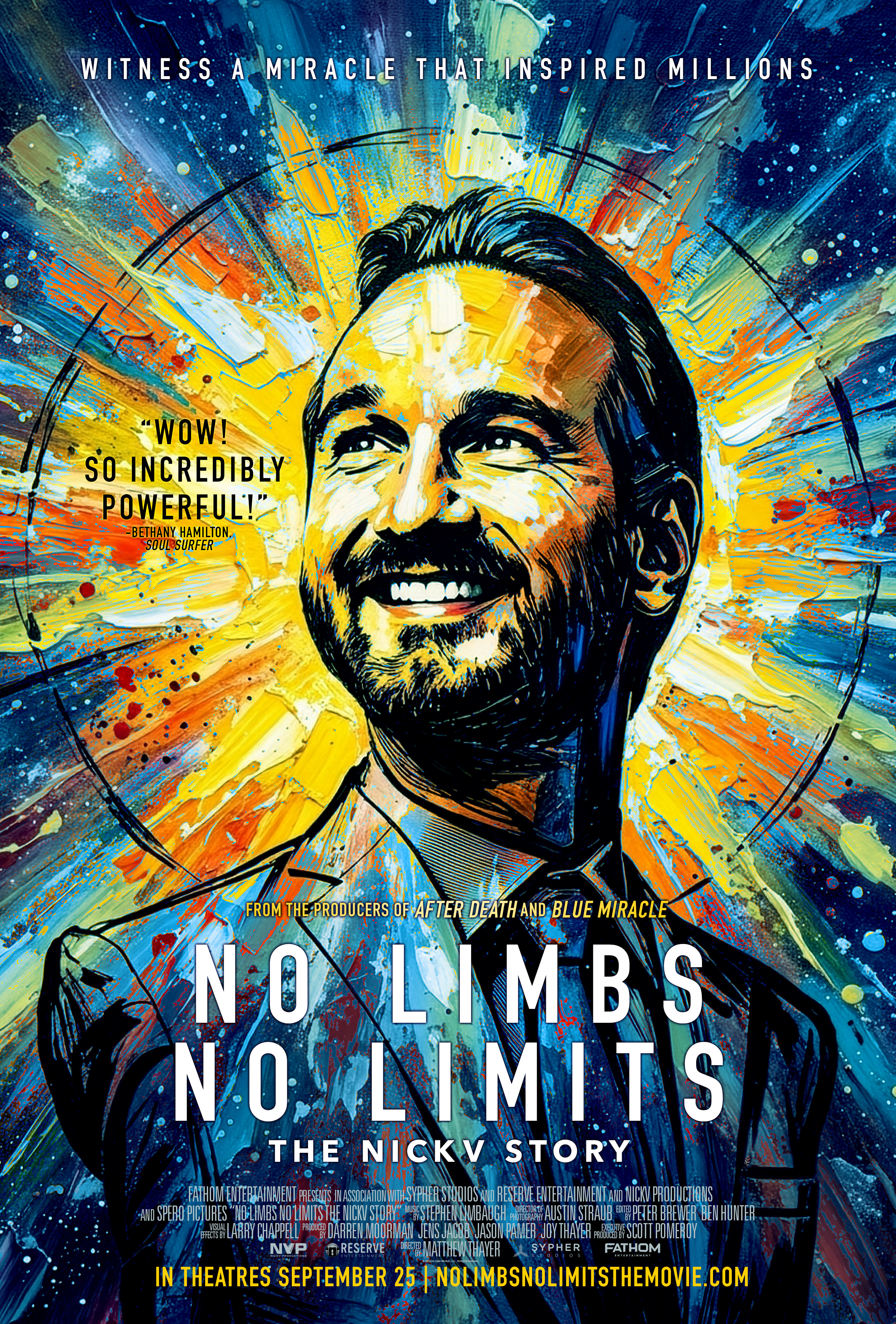 Download the Poster
Print resolution, 2708 by 4000. Free to print for your lobby, bulletin or screens.
“For this people's heart has become calloused; they hardly hear with their ears, and they have closed their eyes. Otherwise they might see with their eyes, hear with their ears, understand with their hearts and turn, and I would heal them.”
Matthew 13:15 (NIV)
Why this guide exists
The purpose of this guide is not merely to inspire people who encounter the story of Nick Vujicic. Its purpose is to ask a deeper question: what does the Christian gospel teach us about suffering, identity, weakness, faith, purpose and hope?
Nick's life is a remarkable human illustration of perseverance and faith. The church must go further. Christianity does not teach merely that you can overcome anything. It teaches that God has acted decisively in Jesus Christ, and therefore suffering, disability, failure, sin and even death do not have the final word.
That distinction is fundamental. The Christian faith is not a theology of self-improvement. It is a theology of creation, fall, incarnation, redemption, resurrection and restoration.
The Christian answer to suffering is not “try harder.” It is “look to Christ.”
The governing movement
- Closed heart
- Awakened heart
- Surrendered heart
- Believing heart
- Serving heart
- Obedient heart
Session One
When God Doesn't Fix It
The journey of trust when prayers go unanswered
Central questionWhat do we do when God does not answer our prayer in the way we expected?
A simplistic theology says that if you have enough faith, God will remove the problem. Scripture does not teach that. The New Testament gives us faithful people who prayed for change and did not receive the change they asked for.
Paul is the clearest example. He describes a thorn in the flesh and says, “Three times I pleaded with the Lord about this, that it should leave me.” God did not remove it. God answered, “My grace is sufficient for you, for my power is made perfect in weakness.”
Christian prayer is not a mechanism for controlling God. Prayer is communion with God. We absolutely should ask God for healing: James 5:14–15 instructs the sick to call the elders of the church, pray, and anoint with oil. But the church must never teach that if God has not healed you, you did not have enough faith. That conclusion cannot be established from Scripture.
Biblical Christianity holds two truths at once. We pray boldly for healing, and we surrender the outcome to God's sovereignty. That is mature Christian faith.
Jesus Himself prayed in Gethsemane, “Not my will, but yours, be done.” The Father did not remove the cup. The apparent defeat of Good Friday became the doorway to resurrection. The cross is God's answer to whether God cares about human suffering: He does not answer with words alone, He enters it Himself.
Ten discussion questions
Does the Bible promise Christians a life without suffering?
No. Jesus says believers will have trouble (John 16:33). Paul says Christians may be afflicted (2 Corinthians 4:8–9).
What did Paul ask God to remove?
His thorn in the flesh (2 Corinthians 12:7–8).
Did God remove it?
Scripture does not say that He did. Instead God promised sufficient grace.
What did God say was sufficient?
His grace (2 Corinthians 12:9).
Does Scripture teach Christians should pray for healing?
Yes. James 5:14–15 gives explicit instructions.
Does unanswered prayer prove a lack of faith?
No. Paul's own prayer demonstrates otherwise.
What does Jesus teach in Gethsemane?
Faith submits ultimately to God's will (Matthew 26:39).
What is the Christian response to suffering?
Prayer, perseverance, faith, community, compassion and hope.
What is the ultimate Christian answer to death?
Resurrection (1 Corinthians 15).
What separates optimism from Christian hope?
Optimism says circumstances will probably improve. Christian hope says God is faithful and resurrection is coming, regardless of present circumstances.
Resolution
I will pray boldly without attempting to control God.
I will ask for healing, deliverance and restoration.
And I will also say: not my will, but Yours be done.
My unanswered prayer will not become evidence against God's character.
Key text2 Corinthians 12:9
Session Two
When Your Identity Is Not Your Limitation
Who you are in Christ, not what you can do
Central questionWho am I when the thing I cannot change becomes the thing everyone notices first?
The biblical answer begins in Genesis. Human beings are made in the image of God. Genesis 1:26–27 establishes human dignity before a person has accomplished anything: before a career, money, athletic ability, academic success, popularity, beauty or status.
The theological term is imago Dei. Human beings are not valuable because society assigns them value. They possess dignity because God created them. Disability does not diminish personhood. Failure does not. Age does not. Physical limitation does not. The church must reject every worldview that measures human worth by productivity.
For the Christian, creation is only the beginning. Paul writes, “If anyone is in Christ, he is a new creation” (2 Corinthians 5:17). The believer's deepest identity is not “I am successful,” or “I am disabled,” or “I am broken.” It is “I belong to Christ.”
Romans 8:15–17 describes believers as adopted children of God. The Westminster Larger Catechism describes adoption as God's gracious reception of believers as His children through Christ, and sanctification as God renewing believers after His image through the Spirit.
Ten discussion questions
What does Genesis 1:27 teach about human dignity?
Every human being bears God's image.
Does physical ability determine spiritual value?
No.
What does 1 Samuel 16:7 teach?
God looks beyond outward appearance to the heart.
What does 2 Corinthians 5:17 teach?
Those in Christ are a new creation.
What does Romans 8:15 teach about Christian identity?
Believers have received the Spirit of adoption.
Can failure erase God's image?
No.
Can disability erase human dignity?
No.
Why is comparison spiritually dangerous?
It produces pride, envy, insecurity or despair.
What does Ephesians 2:10 call believers?
God's workmanship.
What should the church communicate to people with disabilities?
Dignity, belonging, love, inclusion, service and full participation in the body of Christ.
Resolution
I refuse to measure human worth by human performance.
I will see myself and others through God's creation and Christ's redemption.
My limitations may describe part of my experience. They do not determine my worth.
Key text2 Corinthians 5:17
Session Three
When Your Weakness Becomes Your Ministry
God's power displayed through human weakness
Central questionCan God use the very thing we wish He would remove?
Yes, but “use” must be defined carefully. Christianity does not say that suffering itself is good. It teaches that God can bring good from suffering. Romans 8:28 does not say everything that happens is good; it says God works in all things toward good for those who love Him. That distinction prevents a theology that romanticises suffering.
“My grace is sufficient for you, for my power is made perfect in weakness” (2 Corinthians 12:9). Paul then says he will boast all the more gladly of his weaknesses. The point is not that weakness is glorious. The point is that weakness exposes human dependence upon God.
Moses tells God, “I am slow of speech and tongue” (Exodus 4:10). God does not reply that Moses is therefore unusable. God calls him anyway. This is a recurring pattern: God frequently uses people who cannot point to themselves as the explanation for what God accomplishes.
The ultimate example is Christ. The cross appeared to be defeat. The New Testament repeatedly presents Christ's death as part of God's redemptive purpose. Theologically this is cruciformity: Christian existence shaped according to the pattern of Christ's cross. Christian weakness is never the final word. Resurrection is.
Ten discussion questions
What does 2 Corinthians 12:9 teach?
God's grace is sufficient and His power is displayed through weakness.
Why does Paul boast in weakness?
Because weakness makes dependence upon Christ evident.
Was Moses disqualified because of his speech?
No.
Was Gideon naturally confident?
No. Judges portrays him as fearful and uncertain.
What does 1 Corinthians 1:27 teach about God's methods?
God often chooses what appears weak to expose human pride.
Is suffering automatically good?
No.
Can God use suffering for good?
Yes.
What is cruciformity?
A life shaped by the self-giving pattern of Christ's cross.
What is the ultimate example of victory through apparent defeat?
The resurrection of Jesus following His crucifixion.
Who receives the glory when God works through human weakness?
God.
Resolution
My weakness does not disqualify me.
I will not worship my limitations, and I will not be ashamed of them.
I will surrender them to Christ and ask: Lord, how can You use my life for Your glory?
Key text2 Corinthians 4:7
Session Four
Faith When You Cannot See the Outcome
Trusting God beyond what we see
Central questionWhat does faith look like when God has not shown us the ending?
Hebrews 11:1 gives the classic definition of faith, but Hebrews 11 must be read whole. Some in that chapter experienced extraordinary deliverance. Others experienced extraordinary suffering. Faith therefore cannot be defined as “God will give me the outcome I want.”
Faith is not spiritual leverage. We do not believe strongly enough to force God to act. God remains sovereign. Christian faith is relational: I trust God because God is trustworthy.
Daniel 3 is the strongest illustration. Shadrach, Meshach and Abednego believe God can rescue them from the furnace, and they also say, in effect, that even if He does not, they will remain faithful. That is mature faith. God can. And God is still God if He doesn't.
Ten discussion questions
What is faith according to Hebrews 11:1?
Confidence concerning what is hoped for and conviction concerning what is unseen.
Does faith guarantee a preferred outcome?
No.
What does Daniel 3 teach?
Faithfulness does not depend on guaranteed deliverance.
What is the difference between faith and wishful thinking?
Faith is grounded in God and His promises.
Can faithful Christians experience suffering?
Yes.
Can faithful Christians experience fear?
Yes.
What is Christian hope ultimately based on?
Christ's death, resurrection and promised return.
What does Hebrews 11 reveal about faithful people?
Some experienced deliverance; others endured suffering without earthly deliverance.
Why is “but if not” spiritually powerful?
It demonstrates allegiance to God independent of circumstances.
What is the mature Christian prayer?
Lord, I trust You. Give me what You know is best, and give me grace to remain faithful.
Resolution
I will not make God's faithfulness conditional on God's compliance with my expectations.
I will pray boldly. I will believe God can.
And I will remain faithful: but if not.
Key textHebrews 11:1
Session Five
From Receiving a Miracle to Becoming a Witness
Turning grace into purpose
Central questionWhat does God want us to do with the story He has given us?
Christian testimony is not celebrity. It is witness. Acts 1:8 gives the church its mandate: “You will be my witnesses.” The Greek is martys, a person who bears testimony. The Christian's life becomes evidence pointing beyond itself.
The sequence runs: grace received, grace understood, grace embodied, grace communicated, grace multiplied through discipleship. A testimony should ultimately answer what this reveals about God, rather than merely “look what happened to me.”
“Become a miracle” works as a phrase, but it needs theological clarification. Human beings do not become divine, and Christians do not become autonomous sources of supernatural power. The Holy Spirit gives gifts according to His will; 1 Corinthians 12:9 teaches that gifts of healing come from the Spirit. Stronger language is “become an instrument of God's grace.”
In practice that means: encourage someone, feed someone, forgive someone, visit someone, pray for someone, disciple someone, advocate for someone, serve someone, share the gospel with someone. Christian ministry is participation in God's mission.
Ten discussion questions
What does Acts 1:8 mean by witness?
Believers are commissioned to testify to Christ.
Who empowers Christian witness?
The Holy Spirit.
What is the purpose of testimony?
To point people toward God and Christ.
Is testimony supposed to glorify the speaker?
No.
What separates testimony from self-promotion?
Testimony magnifies God's work; self-promotion magnifies the individual.
What does 2 Corinthians 5:20 call believers?
Ambassadors for Christ.
What should Christians do with suffering they have experienced?
Allow God to use it to encourage and serve others.
Does every testimony involve miraculous physical healing?
No.
Can perseverance itself become a testimony?
Yes.
What should happen after someone receives grace?
Grace should produce gratitude, obedience, love and service.
Resolution
My story belongs to God.
I will not use my testimony merely to make myself important.
I will use it to encourage the discouraged, strengthen the weak, serve the hurting and point people toward Jesus Christ.
Key textActs 1:8
Session Six
Open Heart, Open Hands, Open Life
Obedience that changes the world
Central questionWhat does a transformed heart actually do?
This brings us back to the governing text. In Matthew 13:15 Jesus describes people whose hearts have become spiritually insensitive. The opposite of spiritual hardness is not emotion. It is repentant responsiveness.
James 1:22 says, “Be doers of the word, and not hearers only.” The final objective of this guide cannot be “I feel inspired.” It must be “I will obey.”
Jesus summarises the law around two commands: love God, and love your neighbour (Matthew 22:37–40). The evidence of an open heart is therefore not tears during the movie. It is transformed behaviour afterward. An open heart forgives, serves, gives, listens, repents, loves, sacrifices, welcomes, encourages and obeys.
Historic Christian theology calls this process sanctification. The Westminster Larger Catechism describes it as God's gracious work through the Spirit by which believers are progressively renewed into the image of God.
Ten discussion questions
What is the governing text of this guide?
Matthew 13:15.
What is the opposite of a hardened heart?
Repentant responsiveness, not emotion.
What does James 1:22 require?
Doing the word, not only hearing it.
What are the two great commandments?
Love God, and love your neighbour (Matthew 22:37–40).
Is feeling moved by a story the same as obedience?
No.
What is sanctification?
God's gracious work by the Spirit, renewing believers into His image.
Is sanctification instant or progressive?
Progressive.
What does an open heart actually do?
It forgives, serves, gives, listens, repents, loves, sacrifices, welcomes, encourages and obeys.
What is the danger of inspiration without obedience?
It leaves the heart unchanged while feeling changed.
What is the final objective of this guide?
Not “I feel inspired,” but “I will obey.”
Resolution
I will not settle for being moved.
I will forgive someone, serve someone, give to someone and welcome someone this week.
An open heart is measured by an open hand and an open life.
Key textJames 1:22
Small Group Discussion
- Which session's central question is the one you are actually living right now?
- Have you ever been told, directly or indirectly, that unanswered prayer meant weak faith? What did that do to you?
- Where do you catch yourself measuring your worth by what you can do?
- What would it mean to pray boldly and surrender the outcome in the same breath?
- What is the weakness you would never volunteer, and what might God do with it?
- Who in your church is treated as a recipient of ministry when they could be doing it?
- What is one act of obedience this guide is asking of you before next week?
Weekly Personal Challenge
Lord,
Open my eyes to see.
Open my ears to hear.
Open my heart to understand.
Give me courage to turn.
Bring healing that only You can give.
And where You do not remove it, give me grace sufficient for it.
In Jesus' name, Amen.
Key Takeaway
Closed heart → Awakened heart → Surrendered heart → Believing heart → Serving heart → Obedient heart
The final objective of this guide is not “I feel inspired.” It is “I will obey.” An open heart is measured by an open hand and an open life.
Bring Your Congregation
Block booking for No Limbs, No Limits runs through Fathom Entertainment. Tell us how many seats you are thinking about and we will put you in front of the right person there. Every block can be paired with this discussion guide for a four-week teaching series leading into opening weekend, September 25.
Enquire About a Block